I’ve done this tour hundreds of times. And every single time, the person standing next to me at Sultanahmet Square says the same thing: “I had no idea it would be like this.” Istanbul has a way of doing that — you think you know what to expect, and then the city shows you something that stops you mid-sentence.
If this is your first visit, you’re going to want a list. So here’s mine — not the kind written by someone who spent a weekend here, but by someone who walks these streets every day and watches where first-time visitors light up.
1. Hagia Sophia
Start here. No matter what else you do in Istanbul, start here. Hagia Sophia has been standing for nearly 1,500 years — built in 537 AD as a Byzantine cathedral, converted to a mosque after the Ottoman conquest in 1453, turned into a museum in the 20th century, and returned to active use as a mosque in 2020. Every one of those layers is still visible inside if you know what to look at.
The scale of it hits you before you even look up. The dome is 55 meters high and 31 meters wide, and when Emperor Justinian first saw the finished building, he reportedly said: “Solomon, I have surpassed thee.” Non-Muslims can visit freely — the entrance is on the south side of the building. Go early, before the tour buses arrive. The light inside at 9am is something else entirely.
2. The Blue Mosque
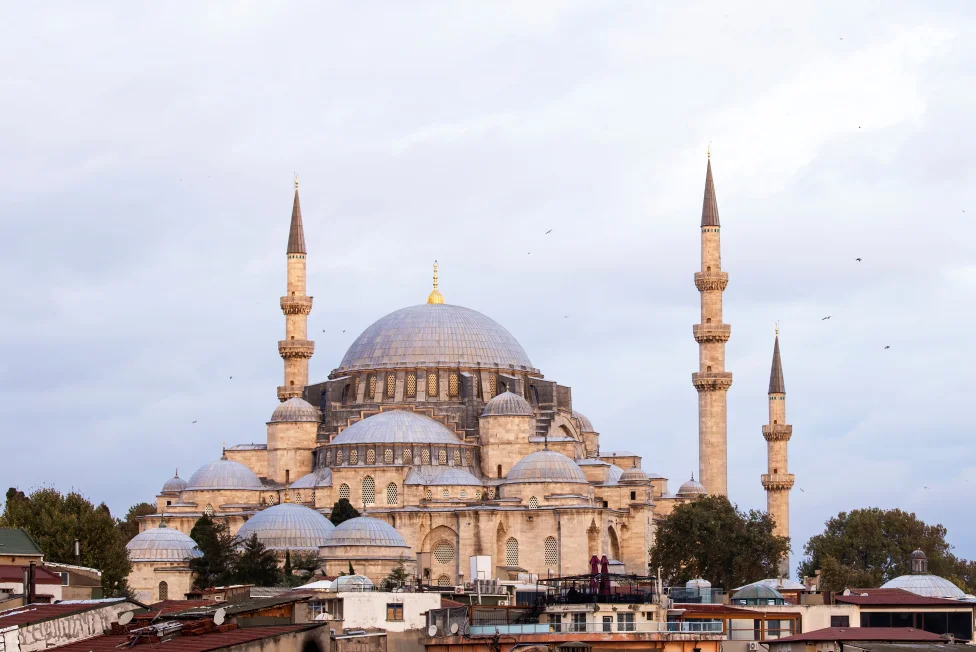
Right across Sultanahmet Square from Hagia Sophia, so you can do both in the same morning. The Blue Mosque — officially Sultan Ahmet Camii — was built between 1609 and 1616 and is still an active place of worship, which means it closes during prayer times (five times a day, for about 90 minutes total). Entry is free for visitors, but check the schedule before you walk over so you’re not waiting outside for an hour.
The name comes from the Iznik tiles inside — over 20,000 of them, in shades of blue that shift depending on the light. It’s also the only mosque in Istanbul with six minarets, which caused a minor diplomatic crisis when it was built because six minarets was the exclusive privilege of the mosque in Mecca. The sultan solved the problem by funding a seventh minaret for Mecca. Come appropriately dressed — shoulders and knees covered, shoes off at the door, women bring a scarf for your head.
3. Topkapı Palace
This is where the Ottoman Empire was run for nearly 400 years, and it shows. Topkapı is not one building — it’s a whole complex of courtyards, pavilions, kitchens, treasury rooms, and the Harem, spread across a promontory where the Bosphorus meets the Golden Horn. The views alone from the fourth courtyard are worth the entrance fee.
Buy your ticket online at muze.gov.tr before you go — the queues at the door can be brutal in summer. The Harem requires a separate ticket and is genuinely worth it: it’s where the sultan’s family actually lived, and the architecture and tile work inside are extraordinary. Allow at least two to three hours for the whole complex. Don’t rush the treasury — the Topkapı Dagger and the Spoonmaker’s Diamond are the kind of things that make you genuinely understand what imperial wealth looked like.
4. The Basilica Cistern
Most people walk right over it on their way between the Blue Mosque and Hagia Sophia without knowing it’s there. The Basilica Cistern is a 6th-century underground water reservoir — 138 meters long, 65 meters wide, held up by 336 marble columns, built by Byzantine slaves, and forgotten for centuries until it was rediscovered in 1545 by a Frenchman who noticed local residents lowering buckets through holes in their floors to draw water.
It’s cool, it’s dimly lit, the columns disappear into dark water, and at the far end there are two massive Medusa heads used as column bases — one upside down, one on its side — nobody knows exactly why. It’s genuinely atmospheric in a way that’s hard to describe. Entrance is paid; buy tickets online to skip the queue. Takes about 30 to 45 minutes.
5. The Grand Bazaar
The largest covered market in the world — 61 streets, over 4,000 shops, and somewhere between 250,000 and 400,000 visitors a day at peak season. It’s been operating continuously since 1461. You will get lost. This is fine. Getting lost in the Grand Bazaar is how you find the good stuff.
A few honest things to know: the first price quoted to you is not the real price. That’s not rudeness — it’s tradition. Negotiate. Be friendly about it. A polite “that’s a bit more than I was hoping to spend” will usually get the price down significantly. The deeper you go into the bazaar, away from the main entrance lanes, the better the quality and the more willing vendors are to have a real conversation. Check your card machine shows TRY (Turkish lira) before you pay — some vendors quietly switch to euros.
6. The Spice Bazaar and Eminönü Waterfront
Smaller than the Grand Bazaar and easier to navigate, the Spice Bazaar sits near the Galata Bridge in the Eminönü neighborhood. It’s been selling spices, dried fruits, Turkish delight, and tea since the 1660s. The smell hits you from fifty meters away. Go in, taste things when offered, buy lokum (Turkish delight) and a box of apple tea, and then walk out to the waterfront.
The Eminönü waterfront is one of my favorite spots in Istanbul — ferries going in every direction, fishermen on the Galata Bridge above, the balık-ekmek boats selling grilled fish sandwiches from the water. Get a fish sandwich. Eat it standing up, watching the boats. It costs almost nothing and it’s one of the most distinctly Istanbul experiences you can have.
7. A Bosphorus Ferry Crossing
You are standing on two continents. The European side is where Sultanahmet and most of the major sites are. The Asian side is where about a third of Istanbul’s 16 million people actually live. A ferry crossing takes about 20 minutes and costs almost nothing with an İstanbulkart transit card.
The public ferry from Eminönü or Karaköy to Kadıköy on the Asian side is the one I always recommend. The crossing is beautiful — you’re out on the water with the old city on one side, the modern skyline on the other, seagulls following the wake. And Kadıköy itself is fantastic: a real neighborhood market, excellent food, zero tourist pressure. Have lunch on the Asian side. It changes your understanding of what Istanbul is.
8. Galata Tower and the Galata Neighborhood
The Galata Tower has been standing since 1348, built by Genoese merchants who controlled this neighborhood for centuries. At 67 meters high, it gives you a 360-degree view of Istanbul that on a clear day extends to the Asian hills across the Bosphorus. Tickets sell out — book online, especially in summer.
But honestly, the neighborhood around the tower is the real discovery. The streets radiating down from Galata toward Karaköy are full of instrument shops, small galleries, old apartment buildings with ornate ironwork, and the kind of cafés where locals actually sit. Walk down toward Karaköy and the waterfront. This is the Istanbul that travel writing rarely describes but everyone falls in love with.
9. A Turkish Hammam
You don’t have to love spas to love a hammam. The experience is different from anything you’ve done before — a marble steam room, an attendant who scrubs you down with a kese (a coarse mitt) until you’re genuinely astonished by what comes off your skin, then a foam massage, then tea in the cooling room afterward. It takes about 90 minutes and you walk out feeling like you’ve been reset.
The Çemberlitaş Hamamı, built in 1584 by the great Ottoman architect Sinan, is the most historic and still one of the best. It’s in the heart of Sultanahmet, easy to add to any itinerary. Go in the late afternoon before dinner — it’s the best possible way to end a day of walking. Separate sections for men and women.
10. Kadıköy Market and the Asian Side
I know I mentioned Kadıköy in the ferry section, but it deserves its own entry. The Kadıköy produce market is one of the best food markets in Istanbul — vendors selling fresh cheese, olives, pickles, bread, fish, and produce, with almost no tourists and very little English spoken. It’s loud and chaotic and completely real.
Walk through the market, then wander into the Moda neighborhood behind it — tree-lined streets, old wooden houses, cats on every wall, small bars and coffee shops where young Istanbullus spend their Sunday mornings. Take the ferry back to the European side at sunset. The view of the historic peninsula from the water, with the minarets against the evening sky, is the image of Istanbul you’ll carry home.
A few practical notes before you go: get an İstanbulkart transit card on arrival — it works on trams, metro, bus, and ferries, and costs a fraction of individual tickets. Buy tickets for Hagia Sophia, Topkapı, and the Cistern online at muze.gov.tr to avoid the queues. Wear comfortable shoes. And give yourself more time than you think you need — Istanbul is the kind of city that slows you down, and that’s exactly right.
Visiting Istanbul for the first time? As a licensed local guide, I show you the city the way it should be seen — the stories behind the stones, the places to eat that aren’t on any tourist map, and the pace that lets you actually take it in. Get in touch here or WhatsApp us at +90 533 231 07 26.